How to read this: Maratua Resort is an independent concierge guide — we curate and compare dive resorts and island stays in the Derawan archipelago, then arrange your booking through a vetted operating partner. We do not own or operate the resorts, and resort or brand names are used only as neutral examples, not claims of affiliation. Prices are by quote and vary by resort, season and party; figures here are indicative. Flights, transfers and dive seasons change — confirm before you travel. This is general information, not a binding offer.
Is Derawan worth it if you have to fly, transfer and speedboat your way there? Yes – if you want mantas, turtles, walls and sting-less jellyfish in one low-key Indonesian archipelago and you’re prepared for a multi-leg journey to reach it. No – if you need five‑star polish, nightlife or direct flights to your doorstep.
This is an honest, first-hand style overview of the Derawan Islands – not marketing from a single resort, but an editor’s attempt to help you decide if Derawan is worth the trip for you.
What you actually get at Derawan
The Derawan Islands sit off the coast of East Kalimantan, Indonesian Borneo. The core cluster most travellers mean by “Derawan” is:
- Derawan Island
- Maratua Island
- Kakaban Island
- Sangalaki Island
Each has a clear signature, and the real value of the area is having all four in easy reach on a single trip.
Derawan Island: turtles, village life and easy dives
Derawan itself is a small, lived‑in island with sandy lanes, a local village and simple overwater and beach accommodations.
In plain terms, what Derawan offers:
- Turtles everywhere
Green turtles are resident here. You can usually see them: - From jetties at high tide
- Snorkelling right off the shore
- On most local dives
You should not expect untouched coral gardens on the house reef; it’s more about close turtle encounters in accessible, shallow water.
- Macro and muck-ish diving
The reefs near Derawan have been impacted over the years, but guides still find: - Octopus, cuttlefish, blue‑spotted rays
-
Nudibranchs and small critters on rubble and jetty pilings
-
Island atmosphere
Think: warungs, kids playing on the jetty, simple cafés, low-key sunset views.
Not: beach clubs, bars or boutiques.
Derawan Island works best as:
- A soft landing spot if you prefer to be near a village
- A good base for snorkellers who just want turtles on the doorstep
- A cost‑conscious base for day trips to the other islands
Maratua: walls, pelagics and quieter stays
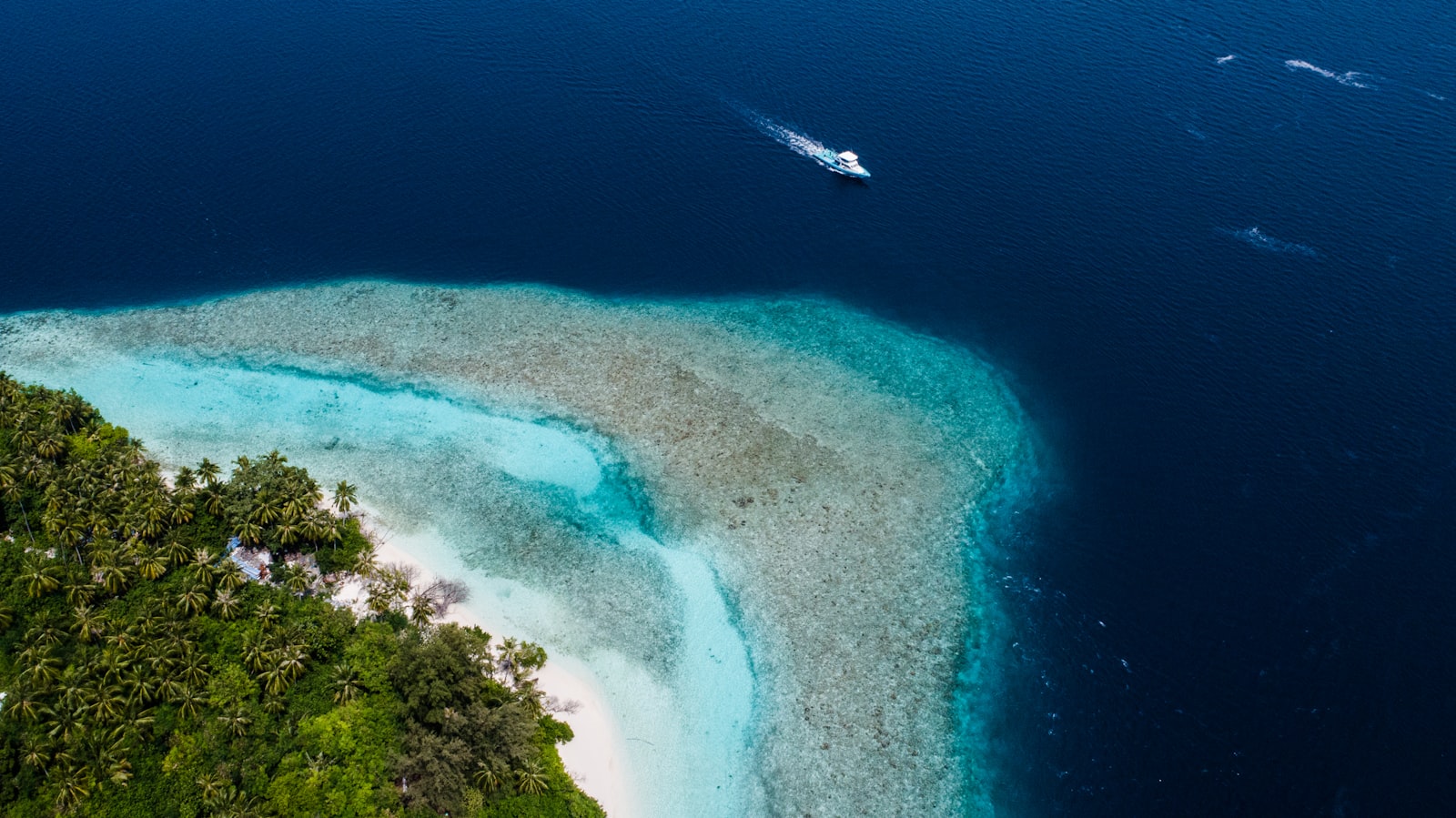
Maratua is a large, horseshoe-shaped atoll. Most visitors stay on the southern and eastern edges where resorts and lodges sit over the lagoon.
What Maratua is really about:
- Walls and drifts
On the outer reef you get classic Indo‑Pacific wall diving: - Steep drop‑offs with hard and soft corals
- Schools of fusiliers, snappers and barracudas
- Turtles on many dives
Currents can be variable; some sites are gentle, others proper drifts.
- Big‑fish moments
The standout site within the atoll is often called Channel / Big Fish Country (names vary by operator). Here, on the right day and tide, you may see: - Schools of barracuda and jackfish
- Reef sharks in the current
- Occasional eagle rays
This is not a guaranteed “every-dive-adrenaline” spot, but when conditions line up it can be very rewarding.
- Sleepier, more retreat-like feel
Compared with Derawan, Maratua is quieter and more spread out. Expect: - Overwater or beach chalets
- Limited, slow-paced nightlife (typically just your resort)
- Better “away from it all” feeling than Derawan Village
Maratua works especially well for certified divers who want more time on walls and are happy with a resort‑based bubble.
Kakaban: sting-less jellyfish lake and wild outer reef
If you’ve seen photos of people calmly swimming among orange jellyfish, that is most likely Kakaban.
Two distinct experiences here:
- The jellyfish lake (sting-less jellyfish)
Kakaban’s inland marine lake is home to non‑stinging jellyfish and other adapted species. A few key points: - This is a fragile ecosystem; fins and sunscreen are often restricted by local rules – follow your guide’s briefings.
- Numbers and visibility vary; some days feel magical, others more muted.
-
It’s a short, surface-level experience rather than a long snorkel session.
-
Outer reef walls and blue water
Outside the lake, Kakaban’s reef slopes and walls deliver: - Healthy hard and soft coral patches
- Drop-offs with good visibility more often than not
- Schooling fish, occasional sharks, and big sea fans
Kakaban is usually a day trip from Derawan or Maratua, combining the lake and one or two dives/snorkels on the outer reef.
Sangalaki: manta cleaning stations and gentle slopes
Sangalaki is best known for manta rays. It’s a low, sandy island with surrounding reefs and cleaning stations.
What’s realistic to expect:
- Manta encounters (in season and with luck)
Mantas use certain spots around Sangalaki as cleaning and feeding stations. Depending on plankton levels, tides and season, you may experience: - Mantas circling above shallow cleaning stations
- Brief passes of single animals
- Or, on quieter days, none at all
Operators often offer both diving and snorkelling approaches to these sites. No reputable guide will guarantee manta sightings.
- Turtles and reefs
Sangalaki is also a turtle nesting area, and you’ll usually see turtles underwater and on the beaches at certain times of year. Reef condition varies from healthy patches to more worn areas – expect a mix, not a pristine, untouched system across the board.
Like Kakaban, Sangalaki is generally visited as a day trip from Derawan or Maratua.
Who Derawan suits
So, is Derawan Islands worth visiting for you specifically? It depends far more on your style than your certification level.
Divers who want “a bit of everything” in one archipelago
If this sounds like you, Derawan is often worth the journey:
- You want:
- Walls, turtles, mantas and a unique jellyfish lake
- A balance of blue-water dives and shallower reefs
-
Variety over absolute “world top‑ten” quality at every site
-
You don’t need:
- Big-city nightlife between dives
- Multiple five-star, international-brand resorts
- An airport 20 minutes from your room
Derawan works well as a one-archipelago sampler: pelagics, macro, turtles, mantas, and the lake in 6–10 days.
Confident snorkellers and mixed dive/non-dive groups
Derawan can be very satisfying if you have both divers and non‑divers in your group:
- Snorkellers get:
- Turtles at Derawan and Maratua
- Good chances for mantas at Sangalaki (conditions-dependent)
-
Kakaban’s jellyfish lake, which is snorkel-only
-
Divers get:
- Proper walls and drifts on Maratua and Kakaban
- Big‑fish potential at Maratua Channel
This mix is where Derawan’s “value” is strongest: one archipelago that keeps everyone reasonably happy on the water.
Travellers who like low-key islands more than polished resorts
Derawan is generally better for travellers who prioritise:
- Being on the water over curated dining and design
- Simple, serviceable rooms over slick luxury
- Local island feel rather than self-contained resorts with tightly choreographed experiences
On the whole, expect charm and location to outpace consistency of finish or service.
Who might prefer elsewhere
Derawan is not for everyone. A clear-eyed derawan honest review has to include who should probably point their map elsewhere.
New divers who want ultra-easy house reef access
If you:
- Are doing your Open Water course
- Prefer to roll out of bed directly onto a broad, protected house reef
- Want multiple teaching-focused dive centers to compare
…you may find more beginner-friendly infrastructure in places like Bali, Komodo (Labuan Bajo) or Thailand’s Koh Tao.
Derawan can work for new divers, but the combination of currents, transit fatigue, and relatively limited operator choice makes other regions smoother for a first certification trip.
Luxury-first travellers
If your main criteria are:
- International-brand five‑star resort standards
- Multiple dining outlets, spa menus, gyms, and seamless butler service
- Consistently high build and finish
…then parts of Raja Ampat, Maldives, or large integrated resorts in Bali or Phuket may align better.
Derawan has some very pleasantly located overwater and beachfront stays, but this is not a polished-luxury destination overall. Think remote-island comfort, not urban five-star replication.
People with very limited time
Derawan’s access is its main friction point. If you have just 4–5 days door-to-door, the number of legs to reach Maratua or Derawan Island may eat too much of your trip.
You may be better off choosing:
- An easier hop like Bali, North Sulawesi (Manado/Bunaken), or Philippines (Cebu/Anilao)
- Somewhere with direct flights from your home base and short transfers
Derawan tends to shine if you can commit 7–10 nights so the travel overhead amortises properly.
The access trade-off
The key reason people ask “is Derawan worth the trip?” is the journey itself.
How you actually get there
Very broadly (and deliberately high-level):
- International flight to Indonesia – typically Jakarta, Balikpapan or another hub.
- Domestic flight to Berau (Kalimantan) – this is the main air gateway for the archipelago.
- Land transfer from Berau Airport to pier – roughly 2–3 hours by car depending on route and traffic.
- Speedboat to your island – times vary:
– To Derawan: usually shorter
– To Maratua: longer open-water run, sea-state dependent
Exact timings shift with sea conditions, departure points and your chosen operator, but plan for a full travel day on each end, not a quick hop.
Weather and seasonal effects
As with most Indonesian islands, general guidance (not guarantees):
- There is no single, absolute “closed” season for the region, but:
- Sea conditions can be rougher in certain monsoon windows.
- Visibility and plankton (and thus mantas) shift through the year.
If you have specific windows in mind, it’s worth sanity-checking timing with someone who has recent, on-the-ground context. You can always plan your trip with our help via email, or WhatsApp us on +62 811 3823 875 for informal advice on what’s realistic in your dates.
Cost and logistics realities
Because of the multi-leg nature of the journey:
- Transfers (especially private speedboats) can be a significant component of total trip cost.
- Domestic flights sometimes see schedule changes; build buffer time into your plan.
- Supply chains to islands are long; you trade hyper-choice in food and amenities for remoteness.
Prices for stays and dive packages vary widely by room type, season, and group size. As a ballpark only (last verified June 2026):
- Per-person packages commonly fall somewhere in the mid-range Indonesian dive-trip band – more than basic backpack routes, generally less than elite liveaboards or ultra-luxury Raja Ampat lodges.
- Transfers can be shared or private, with private options costing materially more but giving more control over timing.
We do not publish fixed prices here because they move with fuel, exchange rates and local policies; instead, trips are usually by-quote, built around your dates and preferences.
How the four core islands compare
To make the “is Derawan worth it” question more practical, it helps to break down the four main islands by what they’re genuinely best at.
| Island | Main draw | Best for | Typical visit style |
|---|---|---|---|
| Derawan | Turtles, village atmosphere | Snorkellers, budget‑conscious, those who like local life | Base island or 1–2 night stop |
| Maratua | Walls, pelagics, quieter stays | Certified divers, couples, longer stays | Primary base for 5–10 nights |
| Kakaban | Sting-less jellyfish lake, outer walls | Divers and snorkellers wanting variety | Day trip from Derawan/Maratua |
| Sangalaki | Manta cleaning stations, turtles | Manta-keen snorkellers and divers | Day trip from Derawan/Maratua |
This is why we usually recommend treating Derawan as an archipelago trip, not a one-island stay: you get considerably more value from combining at least Maratua + Kakaban + Sangalaki (and optionally Derawan itself) than sitting in one place.
Verdict: Is Derawan worth it?
Putting it all together:
- Derawan is worth it if
- You value variety – mantas, turtles, walls, sting-less jellyfish – in one itinerary.
- You’re comfortable trading travel convenience and urban comforts for more remote island time.
-
You have enough days (ideally 7–10 nights) so the journey feels justified.
-
Derawan might not be worth it if
- You have under a week total, including long-haul flights.
- Your priority is easy access, wide nightlife and high-end resort polish.
- You want guaranteed marquee wildlife (e.g., “100% manta on every trip”).
Think of Derawan as an understated, mixed-ability dive and snorkel destination: strong on diversity of experiences, solid on “quality per dollar” for those who care more about the water than the wine list, and imperfect but rewarding if you’re realistic.
If you’re still unsure, the best next step is usually a short, honest conversation about your dates, experience and expectations. You can plan your trip with us via the form, or message our WhatsApp concierge on +62 811 3823 875 and ask bluntly: “Is Derawan worth it for me?” We’ll tell you if another destination suits you better – no one can pay to change what we publish; if you proceed with our partner they may pay us a referral fee at no extra cost to you.
Is Derawan Islands worth visiting for non-divers?
Yes, if you enjoy being in the water. Non-divers can snorkel with turtles near Derawan and Maratua, visit Kakaban’s jellyfish lake, and often see mantas at Sangalaki from the surface. If you prefer staying dry, options are more limited: walks, village visits, reading by the sea. It’s better suited to water‑confident non-divers than to those who dislike boats or swimming.
How many days do I need in Derawan to make the trip worthwhile?
For most travellers, 7–10 nights in the archipelago strikes a good balance. That usually allows for a travel day in and out, a solid block based on Maratua or Derawan, and at least one combined day trip to Kakaban and Sangalaki without feeling rushed.
Is Derawan good for beginners or children learning to dive?
It can be, with the right operator and conservative site choices, but it’s not the easiest place to learn compared with more established training hubs. Currents at some sites and the longer travel time can be tiring for first-timers or younger children. If the main goal is a smooth Open Water course, you may want to compare Derawan with easier-access regions before deciding.
What’s the best base: Derawan or Maratua?
For more serious divers and those seeking quieter stays, Maratua is usually the better base thanks to its walls and access to pelagic sites. For tighter budgets, stronger interest in village life, or snorkel-first trips, Derawan Island can make sense. Many itineraries start on one and end on the other so you experience both atmospheres.
Can I visit Kakaban and Sangalaki in one day from Maratua?
Yes, many operators combine Kakaban and Sangalaki into a single full day by speedboat, typically pairing the jellyfish lake with reef or manta sites. Exact routing depends on conditions, tides and your base. If you’d like help planning a realistic island-hopping sequence, you can plan your trip with us or message WhatsApp +62 811 3823 875 for tailored suggestions.