How to read this: Maratua Resort is an independent concierge guide — we curate and compare dive resorts and island stays in the Derawan archipelago, then arrange your booking through a vetted operating partner. We do not own or operate the resorts, and resort or brand names are used only as neutral examples, not claims of affiliation. Prices are by quote and vary by resort, season and party; figures here are indicative. Flights, transfers and dive seasons change — confirm before you travel. This is general information, not a binding offer.
The best time to dive Derawan is generally the drier, calmer season from around March to October, when seas are more settled and visibility is often at its clearest. Outside that window you can still dive, but conditions in this remote part of East Kalimantan get markedly more variable and logistically harder.
This page is a practical, caveated guide to Derawan’s seasons, manta season at Sangalaki, and how to choose dates for Maratua, Derawan, Kakaban and Sangalaki based on what you want to see and how tolerant you are of wind, chop and rain.
Derawan’s seasons and weather pattern
A year-round equatorial climate
The Derawan archipelago sits just north of the equator off East Kalimantan. That means:
- Air temperatures are fairly constant year‑round, typically around 27–31°C during the day.
- Sea temperatures hover roughly 27–30°C, rarely cold enough to demand more than a 3 mm suit for most divers.
- There is no sharp four‑season pattern; instead there is a wetter, windier period and a relatively drier, calmer period.
Locals and long‑running operators broadly describe two main Derawan weather seasons:
- A “drier” window: roughly March to October.
- A wetter, windier window: roughly November to February.
These are tendencies, not hard borders. El Niño / La Niña years and localised squalls can shift patterns by weeks either way.
Rain, wind and how they affect diving
For dive travel, rain on its own is less of a problem than wind.
- Rain showers: Common throughout the year, often short and intense. They cool the air and flatten the mood but usually don’t stop boats.
- Wind: The real constraint. Strong winds kick up surface chop, lengthen boat rides, and in heavier episodes can temporarily close off crossings between islands.
During the wetter Nov–Feb period, winds in the area are more likely to be:
- Stronger and more sustained.
- From directions that push swell into exposed sections of Maratua’s outer reef and the Derawan–Maratua channel.
- Accompanied by low cloud and squalls that can disrupt domestic flights and speedboat transfers.
By contrast, in the March–October period, you usually get:
- More frequent stretches of calm to light breeze.
- Flatter seas, especially in the mornings.
- Fewer transfer cancellations or delays between Berau / Tarakan and the islands.
As always in the tropics, “usually” is doing a lot of work here; you plan around the odds, not certainties.
The calmer dive window (roughly March–October) and why it helps
Why March–October is generally considered “best”
Most experienced guides based in Maratua and Derawan quietly converge on the same advice: the most reliable balance of access and conditions tends to fall between about March and October. The logic:
- Sea state: Calmer seas make the longer open‑water crossings (e.g. to Sangalaki or Kakaban) more realistic on a regular basis.
- Visibility: With fewer big wind events stirring up sediment, underwater visibility tends to be clearer and more stable.
- Transfers: Berau–Maratua speedboats and local ferries are less frequently delayed or cancelled for weather.
- Overall comfort: Boat rides are shorter and drier, surface intervals are more relaxed, and non‑divers are happier on the beach.
January and February can still offer good days, but they are higher variance. If you are planning a once‑in‑a‑decade visit or travelling with less experienced divers, the odds usually favour March–October.
Month‑by‑month feel (broad tendencies)
These are directional impressions from recent seasons, not promises. Conditions can diverge in any given year.
-
January–February
Wetter, windier, especially around squalls. You can still dive local sites around Derawan and parts of Maratua on many days, but longer trips to Sangalaki / Kakaban are more weather‑dependent. Fewer guests, more of an expedition feel. -
March–April
Transitional into the calmer period. Wind begins to ease, crossings become more regular. Good time if you like quieter resorts but want a higher chance of reaching outer islands. -
May–June
Often a sweet spot: relatively calm seas, improving visibility, and still moderate guest numbers before many regional school holidays. -
July–August
Generally solid conditions for diving and island hopping. Can be busier around Indonesian and some international holidays; popular with families and groups. -
September–October
Still typically within the calmer window. Many divers like late September into October: water is warm, winds can be relaxed, and some operators report reliably good visibility at several marquee sites. -
November–December
Transition back towards wetter and windier. Early November can still be decent; by later December squalls become more common. Demand increases around Christmas–New Year despite more variable conditions.
If your travel dates are fixed by work or school holidays, the more important question is not “perfect month” but “which island and which expectations for this week?” That is where route‑planning and flexibility become key.
Visibility and sea‑state expectations across the year
Typical underwater visibility
Derawan diving conditions vary by site and season, but broadly:
-
Reefs and walls (Maratua outer reef, some Derawan sites)
On better days in the calmer season, visibility might be in the 20–30 m range. After storms or in shoulder periods, 10–15 m is common. -
Channel and current‑exposed sites (e.g. Maratua channel “big fish” dives)
These can have excellent visibility when water flushing is strong and clean, but quickly drop if wind pushes in surface sediment. -
Nearshore / village‑adjacent sites
Closer to islands and river runoff, visibility may be more limited, with 8–15 m entirely normal.
Rain itself doesn’t instantly destroy visibility; it is the wind‑driven mixing and runoff following prolonged wet periods that matters most.
Sea state: crossing between islands
Derawan is not a single island but an archipelago. The marquee sites are spread out:
- Derawan Island: Local reef, turtles, village life.
- Maratua: Walls, channels, pelagic encounters.
- Kakaban: Jellyfish lake on the island plus steep walls outside.
- Sangalaki: Manta cleaning and feeding areas, plus fringing reef.
Getting between them typically involves small to mid‑sized speedboats. Sea state matters for:
- Trip frequency – rougher seas = fewer scheduled island‑hopping days.
- Comfort – even if boats go, chop can be punishing for non‑divers or those prone to seasickness.
- Safety margin – in stronger winds, operators will quite reasonably cancel.
Broad pattern:
- March–October: More days when crossings to Kakaban and Sangalaki are realistic, often in the morning when winds are lighter.
- November–February: More days where skippers exercise caution or stay local to Maratua/Derawan reefs instead of crossing large open stretches.
If you are specifically targeting multiple islands (for example, manta season Sangalaki plus Maratua channels plus Kakaban’s jellyfish lake), the calmer months materially improve your chance of reaching all three.
Manta season at Sangalaki: reliable, but with nuance
Are there mantas all year at Sangalaki?
Sangalaki has long been known for resident manta rays. The conservative summary:
- Mantas are possible year‑round around Sangalaki.
- Sightings are generally more reliable during the calmer March–October window, when boats can reach and work the manta points more consistently.
- Even in “good” months, no operator can guarantee manta sightings on any given day.
Local guides talk less about a single “manta season” and more about conditions that bring them shallower and keep them circling longer:
- Plankton availability: Drives feeding activity; can fluctuate with currents, tides and wider oceanographic patterns.
- Cleaner fish activity: Influences use of cleaning stations at certain bommies.
- Sea state and sunlight: Affect how easy it is for guides to spot mantas and position boats accurately.
Stronger vs weaker manta periods
Patterns over recent years (again, not promises):
- Better odds (in many seasons):
- Roughly April–July, and sometimes into early August.
Relatively stable weather, more regular crossings, and a decent overlap of plankton blooms and comfortable surface conditions. - Still possible, but with more weather caveats:
- November–February. Windier seas can limit time on station, even when mantas are present.
Because manta behaviour is linked to currents, tides and micro‑plankton, even a good “manta month” will have quiet days. Equally, an “off‑season” visit can surprise you with outstanding encounters if a productive water mass pushes in.
If mantas at Sangalaki are your main goal:
- Aim for the March–October window, skewing towards late April–July if your calendar allows.
- Build in enough dive days (ideally at least 2–3 days with access to Sangalaki) to ride out a bad tide or off‑day.
- Stay flexible on‑site: let guides choose which days to run longer Sangalaki trips based on wind and swell.
For more detail on the sites themselves, see our guide to Sangalaki manta diving.
Turtles, jellyfish lake and other year‑round highlights
Turtles around Derawan and Sangalaki
Green turtles are one of the most reliable features of Derawan Island, with nesting activity observed across much of the year. In-water, you can usually expect:
- Regular turtle sightings on dives and even snorkels right off the islands.
- Night‑time nesting and hatching activity at certain times, managed by conservation teams and community projects.
There isn’t a sharply defined “turtle season” in the same sense as some destinations. Instead:
- Different nesting beaches peak at different times.
- Hatching events can cluster in particular months, then taper.
If you are especially keen to understand or witness turtle conservation work, speak to your operator about current guidelines and restrictions: some areas are off‑limits or tightly managed to reduce disturbance.
Kakaban’s jellyfish lake: accessible most of the year
The landlocked marine lake on Kakaban Island, famous for its non‑stinging jellyfish, is generally accessible year‑round when sea conditions allow boats to reach the island and park at the designated entry points.
Key points:
- Jellyfish populations fluctuate with rainfall, temperature and nutrient cycles, but there are usually large numbers present across the year.
- The main constraint is sea state for the crossing, plus any temporary conservation closures that local authorities might apply if needed.
On a typical Derawan itinerary in the calmer season:
- Operators often schedule a combined Kakaban jellyfish lake + outer wall diving day.
- In the windier months, you may still get there, but cancellations are more common and the walkways / stairs can be slippery after heavy rain.
The jellyfish lake is also part of our broader Derawan island hopping overview.
Macrolife, reefs and big fish at Maratua
Maratua offers:
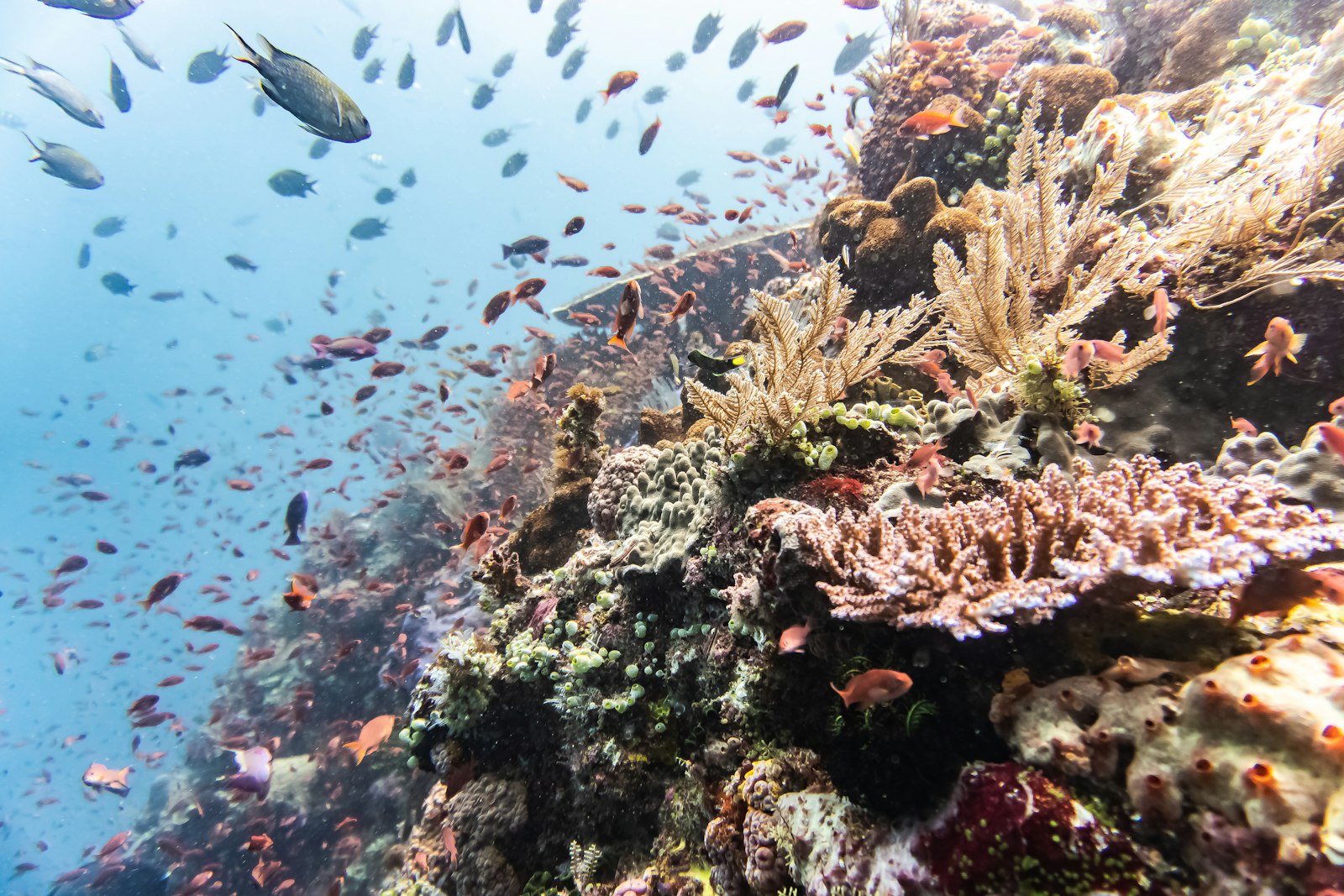
- Wall dives with soft corals and schooling reef fish.
- Channels and corners where currents can bring in barracuda, jack schools and, at times, larger pelagics.
- Macro‑rich slopes and rubble patches with nudibranchs, crustaceans and small cephalopods.
Seasonality here is more about conditions (current strength, visibility, surge) than presence/absence of life. Some broad tendencies:
- Calmer months: More options for accessing current‑sensitive sites safely, with better visibility for schooling fish encounters.
- Windier, wetter months: You may dive more protected leeward sites; macro enthusiasts can still be happy even in 8–10 m viz.
Full site descriptions and typical marine life are covered in our main Derawan diving guide.
Quick comparison: seasons vs priorities
| Priority | Stronger months (usually) | Why | Trade‑offs |
|---|---|---|---|
| Overall best time to dive Derawan (balanced conditions) | March–October | Calmer seas, more stable visibility, more reliable inter‑island access | Busier around school holidays; some popular sites can feel shared |
| Manta season Sangalaki focus | Approx. April–July (within Mar–Oct) | Good overlap of calmer weather and strong manta encounter rates reported by many guides | Still no guarantees; some days mantas may be deep or absent |
| Turtles (Derawan & Sangalaki) | Year‑round | Resident populations and ongoing nesting; sightings on most reef dives | Nesting/hatching peaks shift; conservation access rules may change |
| Kakaban jellyfish lake access | More consistent Mar–Oct | Flatter seas for the boat crossing and safer jetty access | Possible Nov–Feb, but higher risk of cancellations due to swell |
| Quietest time (fewest visitors) | January–February & parts of November | Lower occupancy; more of a “remote expedition” atmosphere | More variable seas, trickier logistics, limited island‑hopping days |
How to choose dates based on crowds, conditions and logistics
Balancing calm seas vs. fewer people
Your “best time to dive Derawan” depends partly on how you trade comfort against solitude.
- You prioritise calmer crossings and higher chances to reach all islands:
- Target May–June or September–early October for a good mix of conditions and moderate occupancy.
- You prioritise fewer other guests and don’t mind higher weather risk:
- Look at late November, early December, or late January–February, while keeping expectations flexible for island‑hopping.
Peak crowds usually align with:
- Indonesian school holidays.
- Chinese New Year, Easter, and Christmas–New Year windows.
- Some regional public holidays where short‑break travellers fill nearer islands.
Crowded in Derawan is still modest by global standards, but it affects:
- How quickly preferred room types book out.
- How many boats share key dive sites or manta points.
- The ease of arranging private or small‑group charters.
Synchronising with flights and transfers
The weakest link in the Derawan chain is often access, not the diving itself. Getting to Maratua or Derawan typically involves:
- A domestic flight to Berau (Tanjung Redeb) or Tarakan, often via Balikpapan or Jakarta.
- Then a speedboat or scheduled boat on to your island.
In the calmer March–October period:
- Speedboat services usually run more predictably.
- You have more confidence to book tightish plane/boat connections (though we still recommend buffers).
In the wetter, windier period:
- Operators may shift boat departure times at short notice, or consolidate services.
- It becomes more important to add a buffer night in Balikpapan or Berau/Tarakan, especially on the outbound leg, in case a boat cannot sail.
Because boat routes and schedules change over time, we keep a continually updated access overview in our dedicated guide to how to get to Derawan.
How long to stay
To give yourself room to ride out the natural variability of Derawan diving conditions:
- 5–7 dive days is a reasonable minimum if you want:
- Local Derawan or Maratua sites.
- At least one full day at Kakaban + outer walls.
- At least one full day at Sangalaki for mantas.
- 8–10+ dive days makes sense if:
- You’re coming specifically for Sangalaki mantas and Maratua channels.
- You’re travelling outside the core calm months.
- You are a photographer wanting repeat shots at the same site in different moods.
If you share your window and priorities, we can sketch a realistic pattern of “local days” vs “long‑range days” based on recent conditions. Use plan your trip or WhatsApp us on +62 811 3823 875 for one‑to‑one planning; no chatbots, just practical route advice.
How precise is seasonal advice for Derawan?
General patterns vs. real‑time reality
All seasonal guidance for Derawan — ours included — is necessarily broad‑brush:
- Weather in the Indo‑Pacific has become more erratic over the last decade.
- Official climate data for this specific micro‑region is limited.
- Localised squalls and wind shifts can dramatically change sea conditions even within a “good” month.
Treat “March–October” and “April–July” as probability bands, not guarantees.
Smart planning therefore pairs:
- Long‑range pattern awareness – choosing your travel window with the odds in your favour.
- Short‑range confirmation – checking real‑time forecasts and sea state in the fortnight before your trip.
- On‑site flexibility – allowing your guides to switch the order of planned island days based on actual wind and wave height.
Forecast tools and local knowledge
Public tools (wind and swell apps, satellite imagery, etc.) give a useful first impression of:
- Wind direction and strength over the Maratua atoll and surrounding seas.
- Rain cells likely to affect crossings from Derawan to Kakaban/Sangalaki.
But they can’t fully replace:
- Knowledge of how certain wind directions funnel between islands.
- Awareness of localised currents in specific channels and reef corners.
As a curation and comparison resource, we’re transparent about the limits of any single forecast. We triangulate between:
- Long‑term climatic norms for East Kalimantan’s coast.
- Decades of accumulated anecdotal experience from guides and boat captains.
- Recent‑season trip reports.
We are not an operator; we don’t dispatch boats ourselves. Instead, if you choose to proceed, we route your enquiry to a vetted partner who runs the boats and makes final go/no‑go calls on daily conditions. No one can pay to change what we publish; if you proceed with our partner they may pay us a referral fee at no extra cost to you.
Scenario‑based advice: picking your own “best time”
If you are a first‑time Derawan visitor
You want:
- A decent chance of manta encounters at Sangalaki.
- Access to Kakaban’s jellyfish lake.
- A representative mix of Derawan and Maratua reefs.
We’d suggest:
- Target window: Late April through June, or September–early October.
- Stay length: At least 7 nights on the islands, with 5–6 dive days.
If you are manta‑obsessed and tolerant of some chop
You care less about flat seas and more about maximising manta interaction time, accepting some rougher runs.
- Target window: Broadly March–August, biasing toward May–July if you can.
- Flexibility: Build several Sangalaki‑capable days into your plan and let guides choose which ones to use.
If you’re travelling with non‑divers or children
Here, smooth logistics and gentle conditions matter more.
- Target window: Typically May–early July or September.
- Considerations:
- Slightly warmer, calmer weather for snorkelling.
- Shorter, less bumpy surface intervals.
- Higher chance that all planned island‑hopping days actually run.
If you want fewer people and don’t mind weather roulette
- Target window: Late January–February or parts of November.
- Reality check:
- You may not reach Sangalaki or Kakaban as often as you’d like.
- You will enjoy quieter dive sites and a more “off‑grid” feel.
Talk through your risk tolerance with us; we can be candid if your desired dates historically align with more cancellations. Use plan your trip or message us directly on WhatsApp at +62 811 3823 875 for up‑to‑date perspective.
Putting it all together: Derawan’s “best time” in one view
- Overall best time to dive Derawan
- Generally March to October, with May–June and September–early October often offering the best balance of calmer seas, visibility and access.
- Manta season Sangalaki
- Possible year‑round, with many guides reporting stronger overall encounter consistency from roughly April–July within the broader March–October calm period.
- Derawan weather season
- Drier, calmer: roughly March–October. Wetter, windier: roughly November–February. These are trends, not strict rules.
- Derawan diving conditions
- Water 27–30°C year‑round; visibility commonly 10–30 m depending on site and recent weather; currents variable from mild to strong at channels.
- Turtles and jellyfish‑lake timing
- Turtles around Derawan and Sangalaki, and jellyfish at Kakaban, are typically accessible all year; access to Kakaban depends more on sea state.
For a deeper sense of what each island offers in practice, triangulate this page with our main guides to Derawan diving, Sangalaki manta diving, and Derawan island hopping.
If you’d like a frank view on your specific dates — including the odds of linking flights and boats smoothly — send a short note via plan your trip or message us on WhatsApp at +62 811 3823 875. We’ll help you match your priorities to a realistic window and connect you with a vetted on‑the‑ground operator if you decide to go.
FAQs: Best time to dive Derawan & Sangalaki mantas
Is Derawan diveable year‑round?
Yes, Derawan is technically diveable year‑round, but sea and weather conditions are more reliable from roughly March to October. Outside that, you can still have excellent diving, but you should expect more variability, occasional cancellations for crossings, and a more “expedition” feel.
When is the best chance to see mantas at Sangalaki?
Mantas are possible throughout the year, but many local guides see more consistent encounters in the calmer period from around April to July, within the broader March–October window. Even then, sightings can never be guaranteed; conditions, currents and plankton all play a role day to day.
What is the water temperature in Derawan and do I need a thick wetsuit?
Water temperatures around Derawan, Maratua, Kakaban and Sangalaki are usually about 27–30°C year‑round. Most divers are comfortable in a 3 mm full suit; those who get cold easily may prefer a 5 mm in shoulder months or for multiple long dives per day.
Can I visit Kakaban’s jellyfish lake during the rainy season?
Often yes, but with more weather caveats. The jellyfish lake itself is accessible year‑round, and jellyfish are typically present. The limiting factor is sea state for the boat crossing and safe access to the jetty. In the wetter, windier months, operators may cancel Kakaban trips more frequently due to swell.
How far in advance should I book for peak season?
For travel in the core calm months of May–June and September–early October, especially around school holidays, it’s prudent to secure rooms and transfers several months ahead. Derawan still feels remote, but capacity is finite and some preferred room types and boat slots can fill early during popular weeks.