How to read this: Maratua Resort is an independent concierge guide — we curate and compare dive resorts and island stays in the Derawan archipelago, then arrange your booking through a vetted operating partner. We do not own or operate the resorts, and resort or brand names are used only as neutral examples, not claims of affiliation. Prices are by quote and vary by resort, season and party; figures here are indicative. Flights, transfers and dive seasons change — confirm before you travel. This is general information, not a binding offer.
Things to do in Derawan without diving centre on three simple pleasures: snorkeling with turtles, floating in Kakaban’s jellyfish lake, and watching mantas from the surface off Sangalaki. Add in slow island time on Maratua and Derawan and you have an easy, salt‑water holiday that never requires a tank on your back.
Derawan has a global reputation as a dive destination, but it’s also one of Indonesia’s more rewarding island escapes for non‑divers who like the sea. The reefs start shallow, the marquee wildlife spends plenty of time near the surface, and most boat trips are run as mixed diver–snorkeler excursions. You can share a boat, not an air gauge.
This guide is written for anyone typing “Derawan for non divers” into a search bar and quietly wondering if they’ll be bored. You won’t be, if you pick the right island base and know what to expect.
You don’t need to dive here
Derawan sits off East Kalimantan in the Makassar Strait, an area fed by the Indonesian Throughflow. That current brings nutrients, nutrients bring plankton, and plankton brings the animals most non-divers come for: turtles, manta rays and the famous sting‑less jellyfish of Kakaban Lake.
Crucially for non-divers:
- Many of the reefs and cleaning stations start in 3–8 m of water.
- Turtles graze and rest in 1–4 m just off the beach on Derawan and Maratua.
- Sangalaki’s manta encounters are often managed from the surface to minimise disturbance.
- Kakaban’s jellyfish lake is a no‑dive site by regulation; everyone there floats and snorkels.
So “Derawan snorkeling not diving” is not a consolation prize; it’s how most of the area’s signature experiences are designed to work.
That said, this is still a remote island region:
- There is no slick, theme‑park infrastructure.
- Boat trips run on local schedules and sea conditions.
- Wildlife is wild — loosely predictable in season, never guaranteed on any given day.
If you are happy with that, Derawan is one of the easier parts of Indonesia to share a serious dive area as a non‑diver.
Turtle snorkeling off Derawan
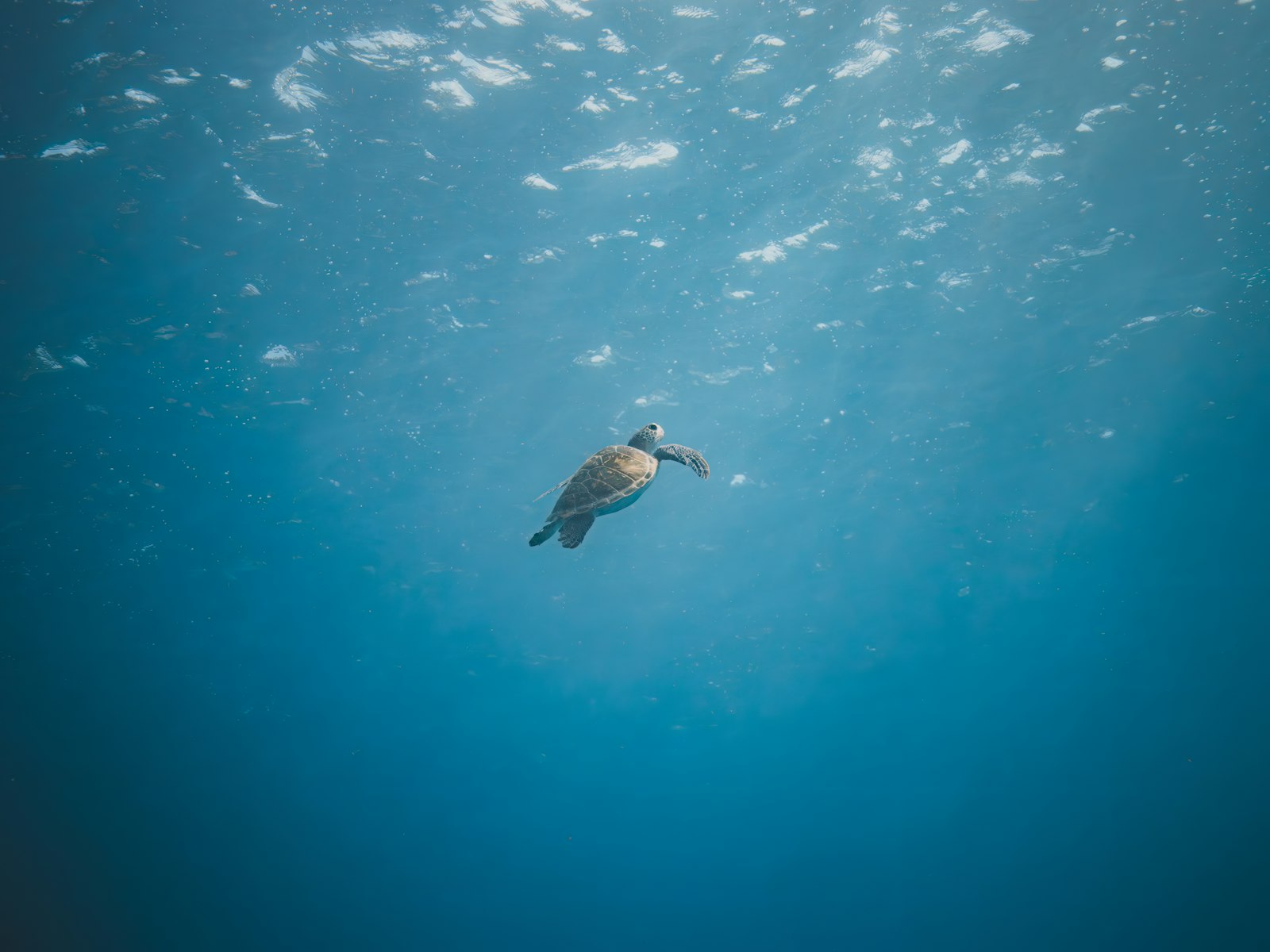
For non-diver Derawan activities, this is the easy, everyday highlight: snorkelling with green turtles from shore.
Why Derawan is good for turtle snorkelers
Derawan Island has an unusually high density of resident green turtles (Chelonia mydas). They graze on the shallow seagrass beds and rest under jetty pylons in water often no deeper than 2–4 m.
In practical terms:
- You can often see turtles from the pier without even getting in.
- A short surface swim (50–200 m) from many guesthouses puts you over grazing turtles.
- You do not need a boat trip to have turtle encounters — though boats help you avoid boat traffic and find quieter patches of reef.
The experience is relaxed rather than high‑adrenaline. Turtles are used to people but still wild; they’ll often let snorkelers float nearby if you stay calm and give them lateral space.
How it works day‑to‑day
Typical non-diver turtle routine:
- Early morning and late afternoon: best light and gentler heat.
- Walk down your jetty or a public pier with mask, snorkel, fins and a rashguard.
- Slide in away from boat traffic; keep your head down and your movements slow.
- Drift along the drop‑off edge, watching the grassier patches and sandy ledges.
You might see:
- Green turtles feeding or resting.
- Occasional hawksbills on the reefier sections.
- Schools of reef fish, small rays, the odd cuttlefish.
You do not need a guide for simple house‑reef snorkeling if you are a confident swimmer and conditions are calm. Many accommodations, however, can arrange a local boatman to drop you on less busy spots around the island or combine a turtle snorkel with a short sightseeing loop.
Conservation basics around turtles
Derawan’s turtles are under pressure from coastal development, light pollution and historical egg harvesting. You help just by being a considerate visitor:
- Do not touch or chase turtles; let them choose the distance.
- Stay to the side, not directly above their head or path to the surface.
- Avoid using flash underwater.
- Keep night‑time beach wandering quiet and torch‑light low and indirect, especially in known nesting areas.
For a deeper turtle focus — including ethical nest watching where possible — our dedicated turtles and snorkel guide (link: Derawan turtles & snorkel guide) goes into more detail.
Kakaban jellyfish lake
If you only do one boat trip as a non-diver, make it Kakaban. The island’s inland marine lake has become one of Indonesia’s more unusual snorkel spots: millions of sting‑less jellyfish, evolved in near isolation.
What the jellyfish lake actually is
Kakaban is a raised coral atoll; the old lagoon has become a brackish, enclosed lake, connected to the sea only via underground fissures. Over thousands of years, several jellyfish species here have lost most of their sting, allowing regulated human swimming without wetsuits or stingsuits.
Important points for expectations:
- You still feel the jellyfish as soft contact on your skin, but they do not sting like normal sea jellies.
- The lake is shallow in many sections; snorkeling is the norm, not scuba.
- Access is via a boardwalk and stairway through forest, not directly from a beach.
Non-divers and divers have the same experience here; scuba is prohibited to protect the ecosystem.
How a Kakaban day trip works
Most operators run Kakaban as a combined boat trip from Derawan or Maratua, often with a second snorkel stop on the outer reef.
The usual pattern:
- Boat ride: 45–90 minutes one way, depending on your departure island and sea conditions.
- Mooring at Kakaban jetty; walk a wooden path across the island (10–15 minutes).
- Mandatory shower and/or feet rinse at the lake entry point (to reduce sunscreen and contaminants).
- Float and snorkel in the designated areas, generally 45–60 minutes in the water.
- Exit, rinse, walk back to the jetty for lunch and potentially an outer‑reef snorkel.
Some things to know:
- Life jackets are usually available; the lake is calm but not supervised like a pool.
- Sunscreen is discouraged right before entering the lake; use long‑sleeve swimwear and a hat on the walk.
- You will need basic mobility for the stairs and boardwalk; there is no step‑free access into the lake.
Rules worth respecting
To keep “Derawan things to do beyond diving” sustainable, Kakaban’s jellyfish lake has firm visitor rules (exact details can evolve, but the principles are stable):
- No fins in certain zones or at all, depending on current regulation — they can damage jellyfish.
- No jumping or diving in from the platforms.
- No touching or scooping jellyfish into masks or hands for photos.
- No scuba diving or free‑diving deep.
Guides and rangers on site are generally clear about what is and is not allowed that season. If in doubt, ask; it’s a fragile, unique ecosystem and the lake’s health directly affects whether visitors are allowed in future.
Sangalaki manta snorkeling
Sangalaki Island is one of the main manta ray aggregation spots in Indonesia, and critically, much of the activity happens in water shallow enough for snorkelers.
What non-divers can expect with mantas
Around Sangalaki, mantas often feed and get cleaned at sites where the reef top is 3–10 m deep. Boats look for:
- Surface feeding: mantas looping and barrel‑rolling through plankton patches.
- Cleaning stations: areas where mantas hover above bommies while cleaner fish work.
For snorkelers, guides typically:
- Position the boat up‑current of the action.
- Ask you to slide in quietly and drift across at the surface.
- Emphasise staying horizontal and not swimming directly at the rays.
Depending on the day, you might be floating above mantas passing a few metres below or watching them cruise near the surface around you. Water clarity changes with plankton; sometimes the visibility is milky where mantas feed most actively.
Wildlife caveat: Sangalaki mantas are not “on call.” There are usually better and leaner weeks; even in a good month you can have a manta‑free visit. Booking multiple potential manta days in a week increases your odds, but never guarantees them.
Season and conditions for manta trips
Derawan’s manta presence is influenced by plankton, currents and broader climate patterns rather than a rigid calendar. As of the last reliable local information:
- Mantas can be seen year‑round.
- Encounters have historically been more consistent outside the worst of the monsoon seas.
- Wind and wave conditions, not just manta presence, dictate if boats will go.
Trip operators and your host will have the most current, experience‑based sense of recent sightings; no one can promise mantas on a particular date.
Snorkel etiquette around mantas
These guidelines are now standard across responsible manta sites:
- Keep at least 3–4 m distance laterally; never try to touch.
- Stay at the surface; avoid diving down through their swimming path.
- Stay out of cleaning stations if guides mark a no‑go zone.
- Keep arms compact and movements slow; mantas are curious but can spook easily.
Ask your guide for a quick manta briefing on the boat. It makes encounters calmer — for you and the rays.
Beaches, villages and downtime
“Derawan for non divers” is not only about daily boat trips. A lot of the charm is the in‑between: long jetties, wooden coastal paths, small kampung streets, and the quiet of a warm evening over the lagoon.
Choosing your island base as a non-diver
Each main island feels different from the surface. For non-divers, this matters more than proximity to deep dive sites.
- Derawan Island
- Livelier village feel with local warungs, homestays and small shops. Easy off‑the‑beach turtle snorkeling. More boat traffic and a bit of bustle on the main jetty. Good if you like people‑watching, street snacks and being able to wander without a schedule.
- Maratua Island
- Larger, more spread‑out, with a mix of villages and quieter resort pockets. Excellent house‑reef snorkeling in many spots, often with fewer day‑trip boats. A good choice if you want more space, long walks and a more “away from it all” feeling without being isolated from trips.
- Kakaban & Sangalaki
- Day‑trip islands rather than overnight bases for most visitors; you come here by boat for jellyfish and mantas, then return to Derawan or Maratua.
For a deeper comparison of where to stay, see our main stays overview (link: Derawan & Maratua stays guide), which lays out typical locations, access and vibe by area.
Simple surface‑level pleasures
On Derawan and Maratua, non diver Derawan activities that fill the hours between snorkels include:
-
Jetty walks and sunsets
Long wooden jetties give wide‑angle views of reef, village life and passing turtles. Sunset is social: kids fishing, families strolling, visitors with cameras and coconut water. -
Village wandering
Wooden houses, small mosques, chicken coops, children playing sepak takraw and volleyball. This is a conservative, predominantly Muslim area: dress modestly (cover shoulders and upper thighs) away from resort beaches. -
Beach time
Expect narrow but attractive beaches rather than endless wide strands. Tides can leave seagrass or rubble exposed at low tide; high tide is best for casual swims. -
Kayaks and SUPs
Some accommodations keep kayaks or stand‑up paddleboards for guest use or rental. Paddling over the shallows is an easy non‑snorkel way to watch turtles and rays; still wear a rashguard and hat, the sun is fierce. -
Reading and hammock time
Derawan is ideal for a long book and intermittent swims. There’s limited nightlife; the night sky can be rich with stars away from bright lights, weather permitting.
Low‑key cultural contact
Tourism is still relatively modest here compared with Bali or Komodo. Respectful small gestures go a long way:
- Ask before photographing people, especially children.
- Learn a few words of Bahasa Indonesia: “terima kasih” (thank you), “selamat pagi” (good morning).
- Buy drinks or snacks from village warungs now and then rather than only consuming in your resort.
- Dress more conservatively when passing through villages than on resort‑front beaches.
This is not a place for large beach bars or loud music; think early nights, quiet conversations and the sound of waves against stilts.
Practical tips for non-divers in Derawan
Equipment: what to bring and what to rent
You don’t need technical kit, but having your own basics makes life more comfortable:
- Bring if you can:
- Mask and snorkel that you know fit your face.
- Lightweight, full‑sleeve rashguard or thin neoprene top.
- Reef‑safe sunscreen for exposed areas (use sparingly in jellyfish lake).
-
Simple waterproof bag or dry pouch for phones on boat rides.
-
Rent or arrange locally:
- Fins: widely available through dive centres and many accommodations.
- Life jackets: normally supplied on boats and for jellyfish lake trips.
Quality and availability vary by island and season; if you’re particular about fit or cleanliness, bringing your own mask and snorkel is a good idea.
Swimming ability and safety
Derawan’s waters can be calm, but currents around passes and outer reefs are real.
Recommendations:
- Be honest about your swimming ability with your host or boat crew.
- Use a life jacket for outer‑reef snorkels if you tire easily or are unsure.
- Stay close to the group; don’t drift far down‑current “just to look”.
- Watch boat traffic near jetties; stay to the sides and listen for engines.
There are no formal lifeguards. Safety is a shared responsibility between you, your guide and the boat crew.
Money, connectivity and expectations
- Cash: Smaller islands have limited or no ATMs that accept foreign cards. Bring sufficient cash from the mainland for meals, snacks and incidental boat trips.
- Cards: Some higher‑end properties accept cards; many small warungs and homestays are cash‑only.
- Signal: Mobile data exists but can be patchy and slow, especially in rough weather and at peak times.
- Power: Power cuts happen. A small power bank is useful for phones and cameras.
Think of Derawan as semi‑off‑grid: connected enough to message home, not a place to upload large media files on demand.
Comparing core non-diver experiences
To help weigh your options, here is a simplified comparison of the main non‑diver highlights:
| Experience | Best for | Water comfort needed | Time commitment | Wildlife guarantee? |
|---|---|---|---|---|
| Turtle snorkeling (Derawan / Maratua) | Relaxed, repeatable wildlife from shore | Basic snorkel skills; often near shore or jetty | 1–2 hours, any day conditions allow | No, but sightings are often frequent |
| Kakaban jellyfish lake | Unique, gentle “float” experience | Comfortable floating; life jackets usually available | Half‑day to full‑day including transit | Jellyfish present in most seasons, densities vary |
| Sangalaki manta snorkeling | Higher‑adrenaline big‑animal encounters | Confident snorkeling in open water with some chop | Half‑day to full‑day including transit | No; completely dependent on wild manta movements |
| Beaches & village time | Slow travel, photography, everyday island life | None; all on land | As much or as little as you want | People, not wildlife; mood shifts with weather and season |
Planning a no‑dive Derawan itinerary
A typical non‑diver week might look like:
- Day 1: Arrival, short house‑reef or jetty snorkel for turtles, village walk.
- Day 2: Morning turtle snorkel, afternoon kayak or SUP, sunset jetty time.
- Day 3: Kakaban jellyfish lake day trip, plus an outer‑reef snorkel if conditions allow.
- Day 4: Quiet day — book, hammock, short swims, optional night snorkel with a guide.
- Day 5: Sangalaki manta‑focused trip (or a second Kakaban trip if mantas have been scarce).
- Day 6: Extra snorkel sessions on your favourite nearby reef; optional second manta attempt.
- Day 7: Last swim, pack, transfer out.
The balance between “doing things” and “doing very little” is what makes Derawan restful. You can front‑load the bigger day trips early in the week, then decide how much more you want based on how you’re feeling and what the weather does.
If you’d like help tailoring a no‑dive plan — including choosing an island base, budgeting for boat days and matching your swimming comfort to specific spots — you can plan your trip with us or send a WhatsApp message to +62 811 3823 875 for calm, no‑rush advice. We’re an editorial concierge: no one can pay to change what we publish; if you proceed with our partner they may pay us a referral fee at no extra cost to you.
How we can help (editorial, not operator)
Maratua Resort is not a resort; it’s a guide‑and‑concierge platform focused on getting the match right between you, the Derawan islands and one of a small group of vetted operators.
For non-divers, that usually means:
- Ensuring you’re based somewhere with good house‑reef snorkeling, not just good boat diving.
- Lining up realistic, by‑quote cost estimates for Kakaban and Sangalaki, last verified against local norms (as of June 2026).
- Checking recent conditions and wildlife reports with people actually on the water.
- Building in rest days so your holiday doesn’t become a sequence of early‑start boat mornings.
If that kind of grounded planning sounds helpful, you can plan your trip through our contact form or via WhatsApp at +62 811 3823 875. Share how many non‑divers and divers are in your group (if any), swimming comfort levels, and what you most want to experience — turtles, mantas, jellyfish, or simply quiet island days.
Is Derawan worth visiting if I don’t dive at all?
Yes, if you enjoy the sea and simple island time. Turtles from the shore, Kakaban’s jellyfish lake and Sangalaki’s mantas are all accessible to snorkelers, and life on Derawan and Maratua is relaxed and low‑key. If you dislike boats, swimming and heat, it may not be the right destination.
Can children and older travellers enjoy Derawan without diving?
Many families and older guests enjoy Derawan from the surface. Key is an honest assessment of swimming ability and mobility. Jetty and house‑reef snorkeling can be very gentle; Kakaban involves stairs and a short walk; outer‑reef and manta trips can be choppier. Life jackets are normally available, but there are no formal lifeguards.
What should I budget for non-diver activities in Derawan?
Costs vary by group size, boat type and island base. As a rough guide last verified June 2026, shared day trips for snorkelers to Kakaban or Sangalaki can run from modest to mid‑range per person, with private charters proportionally more. Simple turtle snorkeling off the beach is effectively free once you have gear. Exact figures are best obtained by quote from a local operator.
Is snorkeling in Derawan safe from jellyfish and strong currents?
Kakaban’s jellyfish lake is famous precisely because its jellyfish have only mild or no noticeable sting. In the open sea, normal Indonesian coastal conditions apply: occasional jellyfish, plus currents around passes and outer reefs. Choosing sites that match your comfort level, using life jackets when needed and listening to local guidance are key to staying safe.
Do I need travel insurance if I’m only snorkeling, not diving?
Yes. Even surface‑only trips can involve boat transfers, slips on jetties, sun exposure and the usual travel risks. A policy that explicitly covers snorkeling and boat activities is sensible in this remote region, where medical evacuation can be complex and costly.