How to read this: Maratua Resort is an independent concierge guide — we curate and compare dive resorts and island stays in the Derawan archipelago, then arrange your booking through a vetted operating partner. We do not own or operate the resorts, and resort or brand names are used only as neutral examples, not claims of affiliation. Prices are by quote and vary by resort, season and party; figures here are indicative. Flights, transfers and dive seasons change — confirm before you travel. This is general information, not a binding offer.
A derawan island hopping day trip is a full-day speedboat circuit linking Kakaban’s jellyfish lake, Sangalaki’s manta zone and a turtle stop, usually from Derawan or Maratua. In one long run you sample the three headline experiences of the Derawan archipelago, at the cost of a packed schedule and a lot of time on the boat.
What a one-day hop usually covers
In practice, a one day Derawan boat tour almost always means a “Kakaban–Sangalaki–turtles” loop. Exact details vary by operator and conditions, but the core pattern is consistent:
- Kakaban Island
- Brackish jellyfish lake (snorkelling, no fins)
- Short forest staircase walk from jetty up and down into the lake
-
Optional reef snorkel outside the wall if time and sea-state cooperate
-
Sangalaki Island
- Boat-based manta searching and snorkelling
- Beach or lagoon stop for surface interval and simple lunch
-
Turtles often seen in the shallows, but the “turtle stop” is usually elsewhere
-
Turtle site (Derawan or Maratua side)
- Shallow reef or seagrass snorkel with green turtles
- Sometimes combined with a quick jetty or sandbar stop
Travel legs are long and all by speedboat:
- From Derawan:
- Derawan → Kakaban → Sangalaki → turtles → Derawan
- From Maratua:
- Maratua → Kakaban → Sangalaki → turtles → Maratua
From both bases you spend most of the day travelling over open water. Expect:
- A full day away (8–10 hours dock-to-dock)
- Multiple 20–60 minute runs at speed
- Plans that can change on the day with weather, current and manta presence
If you want to compare this to other options (e.g. splitting Kakaban and Sangalaki over two days), our broader island-hopping overview is a good starting point: Derawan & Maratua Island Hopping Guide.
Typical running order and timings
There is no single fixed timetable, but most kakaban sangalaki day hop itineraries follow one of two logics: “Kakaban first, mantas second” or the reverse. Both aim to hit key sites when light, tides and crowds are most favourable.
Times below are ballpark; different boats and sea states can change everything by an hour either way.
From Derawan Island
Common running order: Derawan → Kakaban → Sangalaki → turtles → Derawan
- 07:30–08:30 – Depart Derawan jetty
- 09:00–10:30 – Arrive Kakaban, jellyfish lake session
- 10:30–11:00 – Optional outside-reef snorkel (if calm and agreed on-board)
- 11:00–11:45 – Boat ride Kakaban → Sangalaki
- 11:45–13:30 – Manta search and snorkel, simple lunch
- 13:30–14:15 – Sangalaki → turtle site (often near Derawan)
- 14:15–15:15 – Turtle snorkel
- 15:15–16:00 – Return Derawan
On a rough day, one of two things often happens:
- Outside-reef snorkel at Kakaban is skipped
- Turtle stop is shortened or dropped to get home earlier
From Maratua Island
Common running order: Maratua → Kakaban → Sangalaki → turtles → Maratua
- 07:30–08:00 – Depart Maratua (usually from main village or resort jetty)
- 08:30–09:30 – Kakaban jellyfish lake
- 09:30–10:00 – Optional Kakaban reef snorkel (conditions-dependent)
- 10:00–10:40 – Kakaban → Sangalaki
- 10:40–12:30 – Manta search and snorkel, simple lunch
- 12:30–13:15 – Sangalaki → turtle site (often on the Maratua side)
- 13:15–14:15 – Turtle snorkel
- 14:15–15:00 – Return Maratua
Again, sea and weather call the shots. Operators may reorder to chase a favourable manta report (e.g. Sangalaki first if a strong morning sighting comes in on the radio).
How early is “early enough”?
- Many local boats only clear the jetties after 07:00, once fuel is loaded and guests are ready.
- A genuinely early 07:00 departure is an advantage for Kakaban, letting you reach the jellyfish lake ahead of the day-trip wave from both Maratua and Derawan.
If you are booking via us, tell us clearly if you are happy with a very early start; it gives more flexibility to dodge crowds and midday wind.
If you already feel this is a long day at sea and want help matching it to your group’s comfort level, you can plan your trip with us over email or WhatsApp (+62 811 3823 875). We can talk through half-day and two-day options as well.
What you do at each island
The core appeal of the derawan four island day trip format is contrast: three quite different marine experiences, each needing a slightly different mindset and kit.
Kakaban: Jellyfish lake and optional reef
Kakaban is a raised coral atoll with a brackish lake in its interior. Over thousands of years, jellyfish inside the lake evolved with greatly reduced stings. This is one of only a handful of such lakes globally, and the main reason people structure a full day island hop Derawan schedule around Kakaban.
What actually happens at Kakaban:
-
Arrival at the sea jetty
Boats moor at a simple wooden jetty on the outer reef side. From here you:
– Step ashore and rinse feet (if facilities are functioning)
– Walk a forest boardwalk and stairs up and down into the interior -
Climb and descent to the lake
– Allow 10–20 minutes each way, depending on fitness and how busy the stairs are
– The path is usually humid and can be slippery after rain -
Jellyfish lake snorkel
– Fins are not allowed to protect the jellyfish
– Lifejackets may be required or strongly encouraged by local management
– Most visitors spend 30–60 minutes in the lake
– You float quietly, scanning for the jellyfish clusters which can be very dense in certain zones -
Optional outside reef snorkel
– If seas are calm and time allows, your crew may suggest a quick reef stop on Kakaban’s outer wall
– Here you can use fins, and currents can vary from mild to brisk
Practical notes for Kakaban:
- Footwear: Secure sandals or water shoes make the stairs easier.
- Dry bag: Rain showers and dripping forest canopy can soak anything carried loose.
- Environmental rules: Touching or handling jellyfish is discouraged, and sunscreens should be reef-safe; some guides will ask you to rinse off before entering.
Sangalaki: Manta searching, not manta guarantees
Sangalaki is famous for manta rays, but the honest framing is: a manta-focused snorkel search, not a sure-thing encounter.
How a typical Sangalaki stop works:
-
Initial sweep:
– On approach, crew and guide scan the surface for manta fins and feeding behaviour.
– If rays are visible, the boat positions up-current and you enter quietly to drift past or near them. -
Snorkelling pattern:
– Repeat short drifts where mantas are active, returning to the boat each pass.
– If rays dive or move off, the boat may relocate to another cleaning or feeding spot. -
Surface interval and lunch:
– Most day trips use a simple boxed or cooked lunch on the boat or on a quiet part of the beach, depending on regulations and tide. -
Secondary reef time:
– If manta action is slow or absent, guides may shift focus to the general reef life—turtles, schooling fish, macro.
Realistic expectations:
- Seasonality: Mantas are more frequently reported in some seasons than others, but local micro-conditions (plankton, current) often matter more than the calendar.
- No promises: Even on a dedicated kakaban sangalaki day hop, you might see multiple mantas for an hour, a single fleeting ray, or none at all.
Turtle stop: Derawan or Maratua side
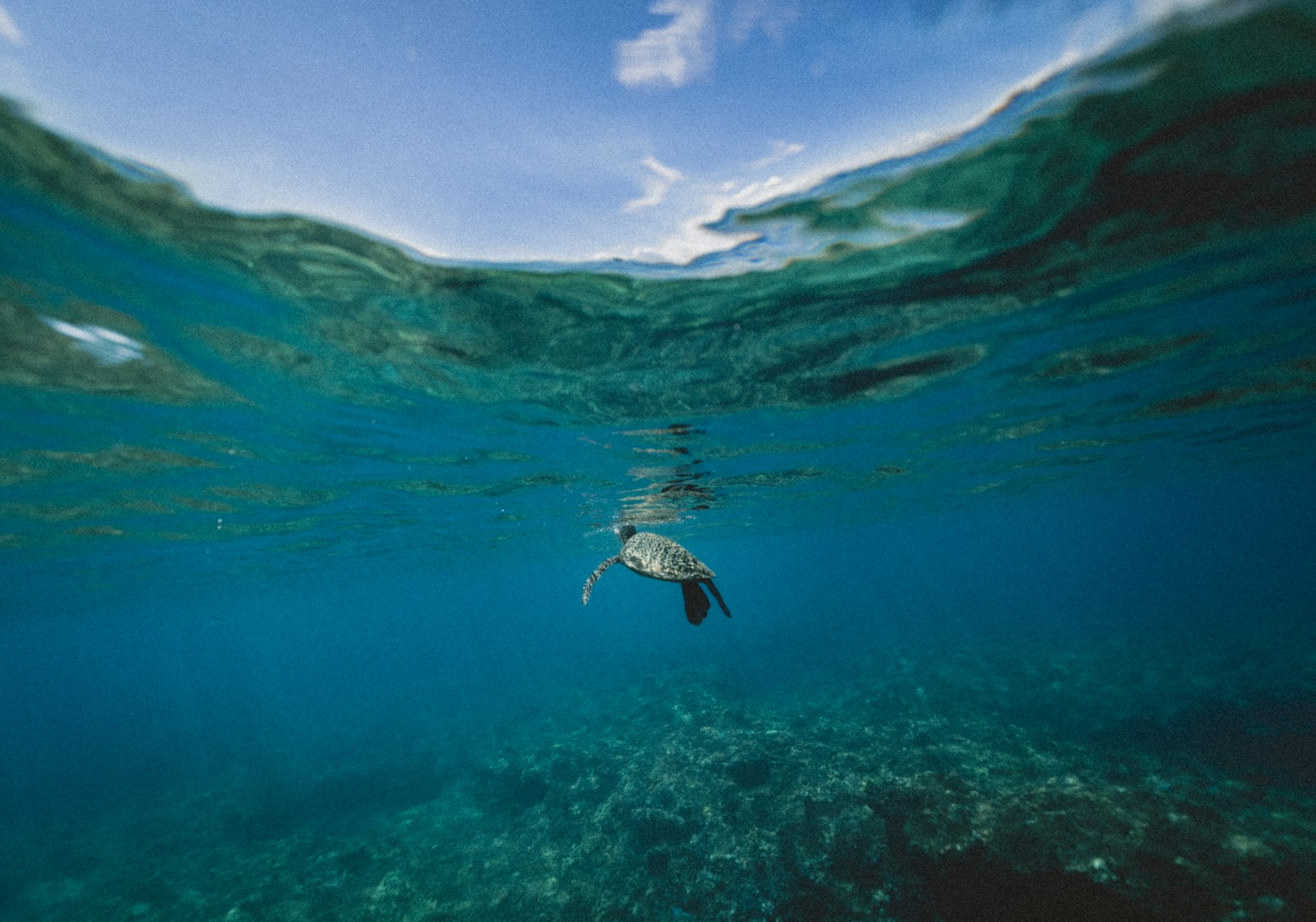
Green turtles are present in numbers across the archipelago; a focused turtle stop folds a high-probability snorkel into your loop.
Common patterns include:
- Derawan turtle snorkel:
- Shallow grass or sand patches close to Derawan, accessible year-round.
-
Often combined with a brief pass by the village jetty where turtles occasionally rest under the stilts.
-
Maratua turtle snorkel:
- Reefs and sandy shelves along Maratua’s inner lagoon or outside walls.
- Visibility can be slightly better in some wind patterns than around Derawan.
During the stop you usually:
- Drift or gently fin across 5–12 m depth, watching for grazing or resting turtles
- Keep a respectful distance, letting turtles surface and breathe unharassed
- Occasionally see other highlights: rays on the sand, schooling jacks, cuttlefish
Activities you do not have time for in this format
A compressed derawan island hopping day trip generally cannot accommodate:
- Kakaban wall diving with multiple tanks
- Extended beach time or full circumnavigation walks on any island
- Sangalaki turtle hatchery visits in depth, if access regulations are tight on the day
- Fishing stops or long sandbar picnics
If those are priorities, you’re better served by multi-day island-hopping or a stay that includes dedicated dive days. Our Kakaban jellyfish lake guide has more on splitting the lake and wall dives into a focused day rather than squeezing them into a transit stop.
Sea conditions and comfort: who this day is (and is not) for
The biggest surprise for many visitors is not the jellyfish or mantas; it is how taxing a full day in a small or mid-sized speedboat can be.
Open water reality
Derawan, Kakaban, Sangalaki and Maratua sit across a shallow shelf that drops into deeper channels. The runs between them are exposed to:
- Wind chop building late morning and afternoon
- Short, sharp waves rather than long rolling swells
- Occasional spray and slamming if the boat is driven fast in lumpy seas
Comfort varies with:
- Boat size and hull shape
- Skipper’s driving style
- Where you sit (mid-boat often softer than bow)
Who usually enjoys this format
- Travellers with reasonable sea tolerance, used to small boats
- Divers and snorkellers who are comfortable getting in and out of the water multiple times a day
- People with limited time, wanting a “headline sampler” of the archipelago in one go
Who might want to rethink
- Guests with known back, neck or joint issues aggravated by impacts
- Families with very young children or anyone nervous in choppy seas
- Travellers who dislike long, wet or noisy boat rides
If in doubt, consider:
- Splitting the loop into two separate days (e.g. one Kakaban-focused, one Sangalaki + turtles)
- Staying on Maratua for a few nights, which can reduce travel time to Kakaban and Sangalaki relative to Derawan in some sea conditions
Weather, cancellations and cut stops
No operator can safely guarantee you all three core stops in all conditions. Reality-based expectations:
- In stiff wind, outer reef snorkels (especially Kakaban wall) are usually the first thing cut.
- In persistent squalls, the turtle stop is often shortened or skipped to get back before the worst of the weather.
- In rare cases of strong winds or storms, the whole day trip may be postponed.
If you work with us to plan your trip, we encourage leaving at least one “buffer” day in your Derawan or Maratua stay so that a cancelled day hop can be rescheduled rather than lost.
What a day trip can’t fit (and when to book more time)
A full day island hop Derawan circuit is appealing because it compresses the marquee experiences. That compression has trade-offs.
Limited dwell time at each site
In broad terms, your door-to-door 8–10 hours usually breaks down to something like:
- Travel time (all legs combined)
- 3–5 hours on the boat, depending on base and sea state
- Kakaban jellyfish lake & walk
- 1–1.5 hours including round-trip stairs and changeover
- Optional Kakaban reef snorkel
- 0–30 minutes, and often skipped in wind
- Sangalaki manta search & snorkel
- 1.5–2 hours including lunch
- Turtle snorkel
- 0.5–1 hour, often shorter if seas build
What you rarely get on such a schedule:
- Long unhurried surface intervals on beaches
- Time to repeat the best snorkels at a slower pace
- Freedom to wait out a quiet manta window in hopes of a later flurry of activity
Comparisons: day trip vs. multi-day
| Option | Pros | Cons |
|---|---|---|
| Single derawan island hopping day trip | Samples Kakaban, Sangalaki, turtles in one go; efficient for short stays; simple to slot into a fixed itinerary. | Long, potentially tiring day; limited time at each site; more exposed to a single day of bad weather. |
| Two separate day trips (e.g. Kakaban day + Sangalaki & turtles day) | More time at each location; better chance of manta encounters over multiple days; flexibility to skip a day if seas are rough. | Higher cumulative cost; needs more nights in Derawan/Maratua; still significant boat time overall. |
| Multi-night base on Maratua with local boat days | Shorter runs to some sites; can “wait out” poor conditions; mix in house-reef diving/snorkelling. | Requires deeper time commitment; not ideal for quick transits through the region. |
Conservation and crowding
Condensing everything into a single “greatest hits” loop also concentrates visitor pressure at predictable hours. Implications:
- Morning waves at Kakaban’s lake stairs; noisier surface environment for the jellyfish
- Clustered boats at Sangalaki’s manta spots, especially on fair-weather weekends
- Turtle snorkels that can feel busy in limited shallow zones
If you have the flexibility, planning mid-week trips and allowing your guide to tweak timings away from peak hours is better both for you and for the sites.
Practicalities: booking, pricing and who is actually running the boat
Maratua Resort, as a platform, does not operate boats itself. Think of us as your logistics and access editor for the archipelago: we help you choose the right style of day trip and then route confirmed enquiries to a single vetted operating partner.
How to book a day trip through us
- Start a conversation
– Email via our plan your trip page, or message WhatsApp +62 811 3823 875. - Share the essentials
– Dates, base (Derawan vs Maratua), number of people, snorkel vs dive preferences, and any mobility or sea-sickness concerns. - We lay out options
– One-day loop vs split over two days
– Approximate travel times from your chosen base
– Expected comfort level for your group profile - We introduce our local partner
– Once you are happy, we connect you to the operator who will actually run your derawan island hopping day trip and handle payments.
No one can pay to change what we publish; if you proceed with our partner they may pay us a referral fee at no extra cost to you.
Indicative pricing and inclusions
Because multiple variables move (fuel prices, boat size, private vs shared charter, inclusion of dive gear), there is no honest single figure. Patterns we currently see (last verified June 2026):
- Shared-boat day trips (joining other guests)
- Often available from larger bases in the low to mid range of local pricing
- Suit solo travellers or pairs on a budget
- Private charters
- Range significantly higher but divide down sensibly for 4–8 guests
- Allow more control over timing and stop emphasis
Typical inclusions:
- Boat, fuel and crew
- Guide (snorkel or dive)
- Basic lunch and drinking water
- Soft drinks and snacks on some boats
- Use of snorkel gear if requested in advance
Typical exclusions:
- National park or local conservation fees (payable in cash on-site in some cases)
- Dive equipment rental (if diving is included in your custom plan)
- Travel insurance and any medical costs
Because fees and conditions change, we always confirm current ranges and inclusions at the time of enquiry rather than publishing a fixed tariff.
If you would like us to sanity-check a tentative plan or compare a full day island hop Derawan loop against simpler options for your group, you can plan your trip with us and we’ll continue the detail over WhatsApp.
FAQs
Is a Derawan island hopping day trip too much for non-divers?
Not necessarily. Most trips are snorkel-based, and non-divers regularly join and enjoy them. The key question is comfort with long, sometimes bumpy boat rides and multiple water entries. If your group includes weak swimmers or anyone anxious at sea, consider a shorter itinerary or splitting the loop over two days.
Can I guarantee seeing mantas at Sangalaki on a one day Derawan boat tour?
No. Sangalaki has a reputation for manta encounters, but they are wild animals influenced by current, plankton and season. Some days deliver multiple close passes, others only distant glimpses or none at all. A multi-day plan that allows repeat visits raises your chances.
Do I need to be very fit to visit Kakaban’s jellyfish lake?
You do not need to be an athlete, but you should be able to manage a humid staircase walk of around 10–20 minutes each way and climb in and out of the lake. Guests with serious knee or balance issues can find this section challenging. Let us know in advance if mobility is a concern so we can advise honestly.
Is it better to base on Derawan or Maratua for the day trip?
Derawan generally offers easier access from the mainland and more budget-friendly stays; Maratua can mean shorter runs to some outer sites and a quieter overall setting. For pure island hopping, both work. Choice often comes down to your flight and transfer patterns and whether you also want house-reef diving.
How far in advance should I book a derawan four island day trip?
For high season or larger groups, aim for at least a few weeks’ notice so we can secure the right-size boat and coordinate with your stay. Outside peak periods, last-minute space is sometimes available, but weather and sea conditions will still govern what is feasible on any given day.